Adaptive Lighting
Warm-toned lamps for evening hours and brighter, cooler light during active work can help signal transitions between activities.
Calm environments are built through intentional arrangement of surroundings, rhythms, and boundaries over time. We share educational frameworks for workspace and home organization that support focused attention and structured transitions — not health or wellness treatment.
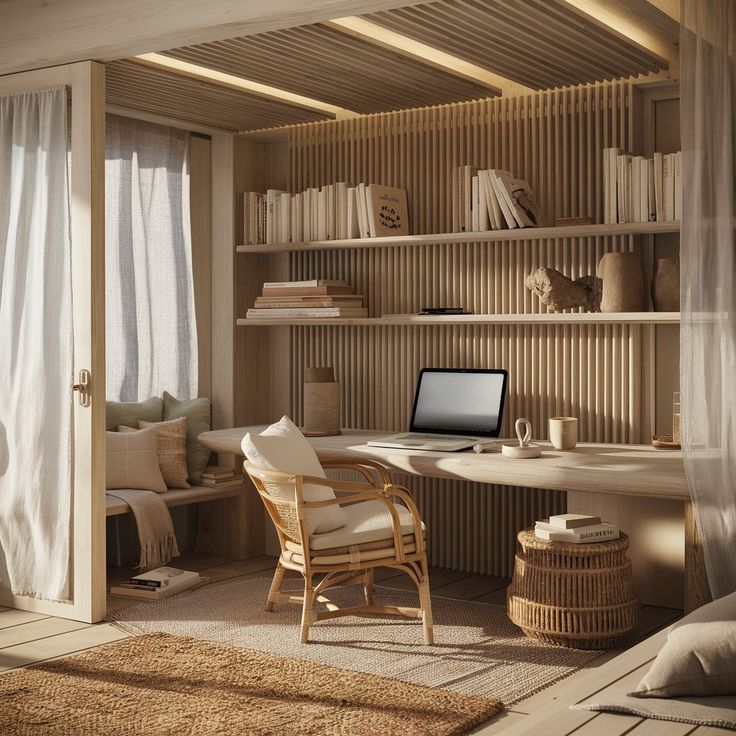
Physical and temporal openness are interconnected. When your environment contains fewer competing stimuli, your attention has room to settle on chosen activities.
Store items out of direct sight lines during work periods. A clear desk surface signals to your mind that the current task has priority.
Assign specific areas for reading, creative work, and breaks—even within a single room. Boundaries help you anticipate what activity comes next.
Plants, natural light, and organic textures can soften a space. These are aesthetic and organizational choices — not substitutes for professional advice.
Our educational materials outline variables you can observe and adjust in your own living or working space.
Warm-toned lamps for evening hours and brighter, cooler light during active work can help signal transitions between activities.
Some individuals prefer silence; others use ambient sound. Experiment to discover what supports your concentration.
Track which colors, patterns, and clutter levels feel supportive during different tasks. Keep a simple log for one week.
Note how various soundscapes affect your ability to concentrate. There is no universal ideal—preferences differ widely.
Chair support, desk height, and room temperature all contribute to how long you can sustain a given activity comfortably.
Whether you work from home or in a shared office, small structural changes can reduce daily friction.
Educational materials suggest gradual transitions from active engagement to quieter evening activities. These are lifestyle planning suggestions — not medical, sleep, or therapeutic protocols.
Reduce screen brightness and shift to non-work applications.
Write three observations about the day—no judgment, only notation.
Reading, stretching, or listening to calm music as a closing ritual.
Which room in your home feels most supportive for focused work? What specific qualities contribute to that feeling?
At what times of day is your environment quietest? How could you align demanding tasks with those windows?
What signals currently mark the end of your workday? Are they consistent, or do they vary unpredictably?
Join our educational workshops to learn practical methods for assessing and adjusting your surroundings.
Two-hour session covering space audit techniques, zone mapping, and sensory observation exercises with peer discussion.
Personalized walkthrough of your environment via video call, with written recommendations for structural adjustments.
Our Seattle team offers informational consulting to help you plan organized environments aligned with your daily schedule. No outcomes are guaranteed.